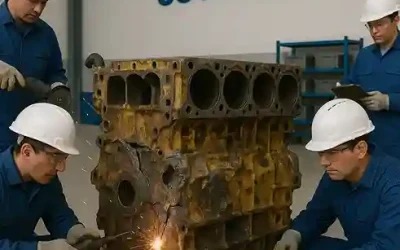
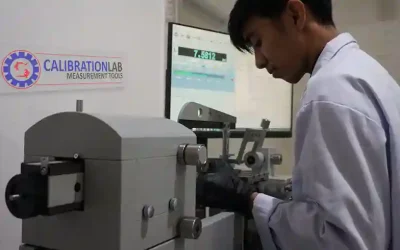
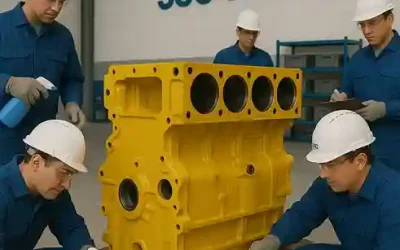
Explore the evolution and innovations shaping modern industrial workshops today.
Modern Industrial Workshop Trends & Best Practices
In today’s manufacturing and heavy fabrication environment, a “workshop” is no longer just a space for cutting, welding, and assembly. Modern workshops are evolving rapidly — integrating smart systems, data analytics, and advanced automation. For a company like SSC Works, operating in fabrication, repair, surface treatment, and heavy equipment servicing, staying ahead of these trends is critical.
Below is a detailed breakdown of current developments, key data, and actionable insights for your workshop operations.
1. Workshop as a Smart Facility
The concept of a workshop now extends beyond physical tools and manpower — it is increasingly a “smart” facility. According to research in 2025 by Deloitte on smart manufacturing and operations, companies that embrace digital technologies are “more agile, more attractive to talent, and more productive.” Deloitte
Key technologies include:
Industrial Internet of Things (IIoT): Connecting machines and sensors for real-time monitoring. Rockwell Automation+2utthunga.com+2
Edge computing + cloud analytics: Data is processed close to the machines (edge) and aggregated in the cloud for strategic insights. Rockwell Automation+1
Digital twins & simulation: Workshops can model equipment, layout, process flows, and optimisation before real-world implementation. Lee Industrial Contracting
For SSC Works, this means moving from reactive repair/fabrication to proactive, data‐driven operations: measuring machine health, scheduling maintenance, and optimising workflow.
2. Productivity & Efficiency Gains – Data Insights
While many companies invest in technology, the data shows mixed results — yet there are clear opportunities:
According to a study on labour productivity in manufacturing, meaningful improvements remain challenging though technology investment continues. Operations Science Institute
More targeted research found that IoT usage in attendance management and productivity monitoring in Central Java manufacturing improved employee performance and operational efficiency significantly. ResearchGate
An academic framework study (2025) found that IoT-enabled smart manufacturing frameworks led to an 18% reduction in energy consumption, a 22% decrease in machine downtime, and a 15% improvement in resource utilisation. arXiv
For SSC Works’ workshop operations, these data points highlight that gains may come not just via big-equipment upgrades, but via better utilisation of data, sensors, worker monitoring, and process optimisation.
3. Equipment & Tooling Trends in Workshops
Workshop tooling and equipment trends in 2025 show relevant shifts that can impact fabrication/repair shops:
The global “workshop equipment” market is trending toward electrification, automation, modular tool-kits, and smart diagnostics. Accio
For example: tools used for servicing electric vehicles (EVs) require high-voltage diagnostics; diagnostic tools now connect to cloud and software platforms; modular toolboxes with eco-friendly material. Accio
For SSC Works, this suggests reviewing your tooling portfolio: are your drilling, cutting, welding, and finishing tools aligned with “smart” features? Are you prepared for evolving demands (e.g., EV servicing, automated work-cells, digital tracking)?
4. Workforce & Skills: The Human Factor
Technology is only part of the puzzle. Workshops depend on skilled personnel, safe operations, and process discipline. Recent industry work shows that:
In smart manufacturing roll-outs, leading firms prioritise people and operational needs before pure technology. IoT Analytics
The concept of “Work 4.0” reflects evolving work roles under Industry 4.0 — workshops are shifting: operators become machine-monitors; fabricators work alongside cobots; maintenance becomes predictive rather than reactive. Wikipedia
For SSC Works, this implies investing in training (welding, finishing, NDT/inspection, digital sensors), aligning roles (machine operator → data operator → process optimiser), and establishing clear processes (e.g., QC checkpoints, OEE tracking, digital logs).
5. Sustainability, Safety & Compliance
Modern workshops must balance productivity with environmental and safety standards. Key trends:
Automation and smart tooling help reduce energy consumption, waste, and downtime. (see IoT reduced energy/down-time data above)
Safety integration: automated/predictive maintenance reduces unexpected failures; smart sensors detect issues early; documentation and digital traceability aid compliance with standards like ISO 9001, ISO 14001, SSPC/NACE for surface treatment.
Circularity and tooling/material reuse: Workshop equipment market notes increased demand for used equipment and modular toolboxes with recycled materials. Accio
For SSC Works’ surface-treatment and fabrication business, this means: track energy usage in blasting/painting booths; use data to optimise consumables; ensure all safety/inspection steps are digitalised and traceable.
6. Best-Practice Framework for SSC Works’ Workshop
Here is a proposed framework to align your workshop operations with current trends and data-backed insights:
Baseline Audit: Map existing workshop state – layout, equipment age, downtime data, repair backlog, consumables usage, workforce skill levels.
Sensor & Data Layer Setup: Install sensors on key machines (welders, CNCs, blasting booths, cranes) to capture cycle time, energy use, idle time, errors.
Process Digitalisation: Move from paper-based logs to digital checklists, integrated software (MES or simpler digital dashboards), QC/inspection tracking.
Tooling & Equipment Review: Evaluate if older machines can be retrofitted with smart diagnostics; assess modular tooling upgrade; ensure readiness for new demands (e.g., EVs, higher alloy steels, advanced coatings).
Workforce Upskilling: Train staff in digital tools, data interpretation, preventive maintenance mindset; shift roles toward oversight, optimisation, data-driven decision-making.
KPI Monitoring: Set measurable goals such as reducing unplanned downtime by X%, increasing throughput by Y%, reducing energy consumption/WIP by Z% (use data from research as benchmarks).
Continuous Improvement: Use data feedback loops (e.g., weekly dashboards), root-cause analysis of delays, maintenance logs, quality rejects; integrate into a culture of ongoing optimisation.
If you’re ready to elevate your workshop operations – from traditional setups to smart, efficient, future-proof facilities – let’s talk. Contact SSC Works today and discover how our engineering expertise, tooling know-how, and process optimisation can transform your workshop into a high-performance hub built for the demands of tomorrow.